
SPECIALTY · HERNIA SURGERY
Hernia Surgery in Bangalore — keyhole, robotic and open repair, done right the first time
A hernia won’t fix itself, but fixing it is one of the most reliable operations in surgery. Dr Ameet Kumar repairs every kind of hernia — groin, belly-button, after-surgery and complex — using keyhole (laparoscopic), da Vinci robotic or open mesh techniques, whichever is genuinely safer for you.
4,500+
Surgeries
25+
Years Experience
56+
Publications
FRCS (Glasgow)
AIIMS-trained GI Surgeon
What a hernia is — in plain words
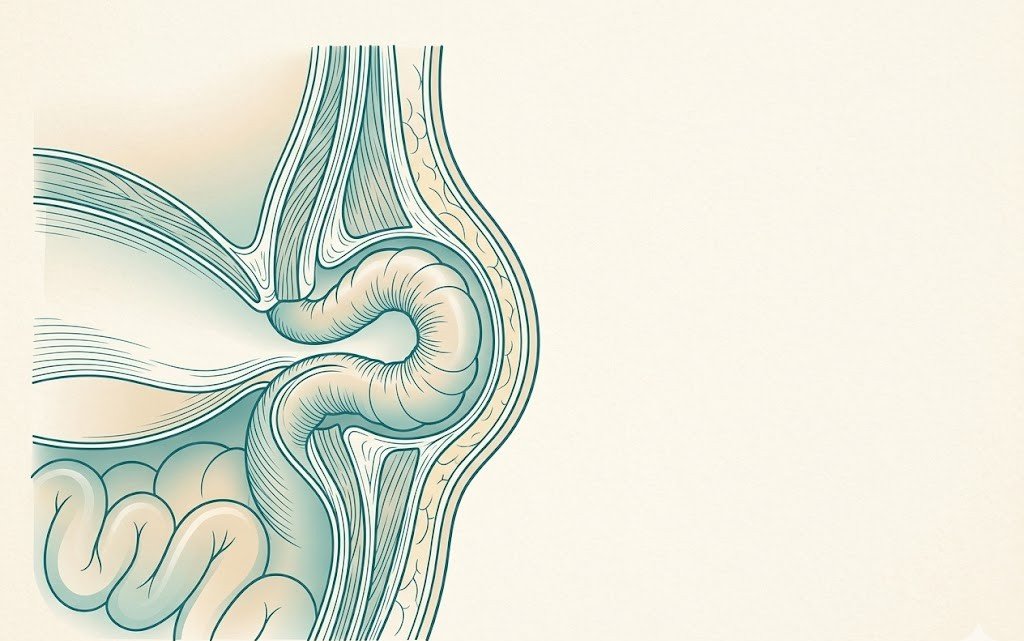
A hernia is a gap or weak spot in the muscle wall of your tummy or groin, through which something inside — usually a bit of fat or bowel — pushes out. You often notice it as a soft lump that appears when you stand, cough or lift something, and may slip back when you lie down. It can be painless at first, or give a dragging, heavy ache by the end of the day.
Here’s the honest truth: hernias don’t heal on their own, and they don’t go away with tablets, belts or exercises. Over time the gap usually gets a little bigger and the lump a little more bothersome. The good news is that a planned repair is a safe, well-understood operation — most patients go home the same day or the next, and get back to normal life quickly.
The one situation that needs urgent attention is when a hernia becomes stuck (irreducible), hard, very painful, or comes with vomiting — this can mean the bowel is trapped and losing its blood supply, which is an emergency. If that happens, you should be seen the same day. For everything else, the right approach is to plan a repair calmly, at a time that suits you, before complications force your hand.
Hernias Dr Kumar treats
Dr Kumar also repairs diaphragmatic and internal hernias, and paediatric hernias using a single-port (keyhole) technique for children.
How the repair is done
Laparoscopic (keyhole) hernia repair — TEP, TAPP & eTEP
Small cuts, a mesh placed from inside — ideal for groin hernias and for fixing both sides in one operation. Dr Kumar performs TEP (totally extraperitoneal), TAPP (transabdominal preperitoneal) and eTEP (extended TEP) techniques.
Open mesh repair
The time-tested approach — the right choice for certain hernias and patients. Provides an excellent, durable result and remains the first choice in specific clinical situations.
Complex / large ventral hernia repair with component separation
For large or recurrent abdominal-wall hernias — rebuilding the muscle layers using anterior and posterior component separation. This is specialist-level surgery requiring advanced training and judgement.
Every operation is performed with advanced laparoscopic or da Vinci robotic surgery, or open where that is the safer choice for you.
Why this matters — an evidence-backed hernia practice
Hernia repair looks routine, but doing it well — with a low chance of it coming back and the least pain afterwards — depends on experience and judgement. Dr Ameet Kumar offers the full range of hernia surgery: laparoscopic groin repair (TEP, eTEP and TAPP), open mesh repair, ventral and incisional repair including component separation, diaphragmatic and internal hernias, and single-port paediatric hernia surgery.
Research record in hernia surgery
Backing all of this: AIIMS training, the FRCS (Glasgow), da Vinci robotic certification, over 4,500 surgeries across 25+ years. When you choose your surgeon, this is the depth you want behind the operation. Robotic-assisted repair is especially valuable for complex ventral and incisional hernias, where 3D vision and wristed instruments improve mesh placement. Learn about robotic surgery →
Why keyhole repair — and when open is the better choice
For most groin hernias, the keyhole (laparoscopic) approach has real, everyday advantages:
That said, keyhole isn’t automatically right for everyone — and I’ll always tell you that honestly. For some hernias, certain previous operations, or particular health conditions, an open mesh repair is the safer, more sensible choice and gives an excellent, durable result. For large or recurrent abdominal-wall hernias, the answer may be an open reconstruction with component separation. The technique is chosen to fit your hernia and your body — never the other way round.
Common questions about hernia surgery
Yes. Mesh has been used in hernia repair for decades and is the standard of care worldwide, because it dramatically lowers the chance of the hernia coming back compared with stitching the gap alone. It’s a soft surgical material that your body’s own tissue grows into over a few weeks. Serious mesh problems are uncommon, and choosing the right type and placement — which comes down to the surgeon’s experience — keeps that risk low.
A properly done mesh repair has a low recurrence rate. The biggest factors are the surgeon’s experience, the right technique for your hernia, and how well it’s secured. Dr Kumar’s own research on mesh fixation and large laparoscopic series is focused on exactly this question — getting durable repairs with minimal pain.
Most people doing desk or light work are back within about a week after a keyhole groin repair. Heavier lifting and strenuous exercise are usually fine by around four to six weeks, once the mesh has settled in. For bigger or open repairs, recovery is a little longer. You’ll be given a clear, personal recovery plan — there’s no need to guess.
A painless hernia is usually not an emergency, but it won’t disappear, and it tends to grow slowly over time. The safest plan for most fit patients is a planned repair before it gets larger or complicated. If yours is small and giving no trouble, Dr Kumar will discuss watchful waiting honestly — surgery is advised only when it’s genuinely the right thing for you.
Yes. One of the real strengths of the keyhole approach is repairing hernias on both sides of the groin in a single operation, through the same small cuts — so you recover once, not twice.
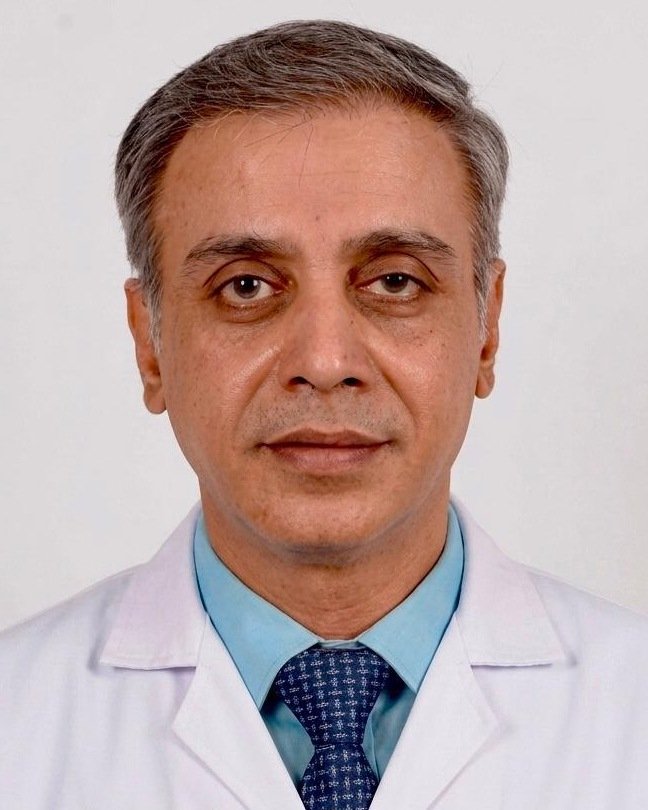
Written & medically reviewed by Dr Ameet Kumar, M.Ch (GI Surgery, AIIMS), FRCS (Glasgow), FAIS — Gastrointestinal, HPB, Laparoscopic & Robotic Surgeon. Last updated: September 2026.
Get a clear answer about your hernia
Book a consultation with Dr Ameet Kumar, or message his team on WhatsApp. He’ll examine you, explain whether keyhole, robotic or open repair suits you best, and answer every question honestly — so you can decide with confidence.