
ACID REFLUX · GERD · HIATUS HERNIA
When heartburn keeps coming back, there’s a real answer
Constant acidity, a burning chest, food and acid washing back up your throat — when it happens often, it’s more than a nuisance. It’s a treatable condition called GERD, and it’s often linked to a hiatus hernia. Dr Ameet Kumar is an AIIMS-trained gastrointestinal surgeon in Bangalore — FRCS (Glasgow), with over 4,500 surgeries across 25 years — who treats reflux from simple lifestyle advice all the way to keyhole surgery when it’s truly needed.
4,500+
Surgeries
25+
Years Experience
56+
Publications
FRCS (Glasgow)
AIIMS-trained GI & HPB Surgeon
What’s actually going on inside
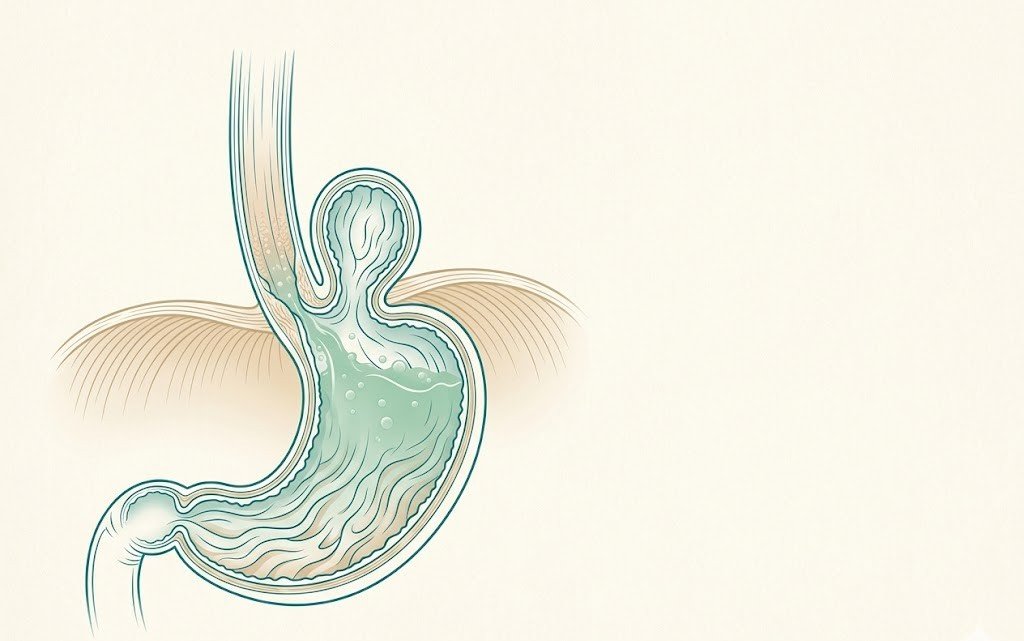
Where your food-pipe meets your stomach there’s a muscular valve. It’s meant to open to let food down, then close tightly so the acid in your stomach stays where it belongs. Acid reflux happens when that valve is weak or loose and stomach acid flows back up into the food-pipe. The burning feeling you get is what most people call heartburn.
The odd bout of reflux is normal — almost everyone gets it now and then. But when it happens often, week after week, and starts to affect your sleep, your eating or your daily life, it has a name: GERD (gastro-oesophageal reflux disease). Over time, that repeated splash of acid can inflame and damage the lining of the food-pipe.
A hiatus hernia is closely tied to all this. Your food-pipe passes through a small opening in the breathing muscle (the diaphragm) on its way to the stomach. In a hiatus hernia, part of the stomach slides up through that opening into the chest. This weakens the valve even more — which is why a hiatus hernia and stubborn reflux so often go together.
The good news: this is a well-understood problem, and there’s a clear, step-by-step path to fixing it.
Symptoms — and the signs that need prompt attention
Common symptoms of acid reflux and GERD include:
These symptoms are common and very treatable. But some signs should never be ignored. See a doctor promptly if you have any of the following:
These red flags don’t mean something is seriously wrong — but they do mean you need to be checked properly rather than waiting. Dr Kumar would always rather see you and put your mind at rest.
Why reflux happens
Reflux usually comes down to that valve not closing well, and several things can make it more likely:
Often it’s a combination of these rather than a single cause — which is why treatment usually starts by tackling the everyday factors first.
How reflux and hiatus hernia are diagnosed
For many people, the symptoms tell a clear enough story to start treatment straight away. When symptoms are severe, long-standing, or there are any red flags, Dr Kumar may advise one or more simple tests to see exactly what’s happening and to plan the right treatment:
Dr Kumar will only recommend the tests you actually need, and he’ll explain what each one is for in plain language before anything is done.
How reflux is treated — gentlest options first
The right treatment depends on how bad the reflux is and what’s causing it. Dr Kumar’s approach is always to start with the simplest, least invasive steps, and only consider surgery when it’s genuinely the better path.
Step 1 — Lifestyle changes
For many people these alone make a real difference: losing some weight, eating smaller meals, avoiding late-night food, cutting down on spicy and oily food, alcohol, caffeine and smoking, and raising the head of the bed for night-time reflux.
Step 2 — Medicines
Tablets that reduce stomach acid (such as proton-pump inhibitors) settle symptoms for most people and let the food-pipe heal. For a lot of patients, lifestyle changes plus medicines are all that’s ever needed.
Step 3 — Surgery, when it’s truly needed
Tablets control the acid, but they don’t fix a weak valve or a hiatus hernia — so for some people the reflux returns the moment they stop. Surgery is worth considering when:
Surgery isn’t a first step, and Dr Kumar will never rush you toward it. But when reflux is severe and lifelong tablets aren’t the answer, a well-done keyhole operation can be genuinely life-changing.
Dr Kumar’s surgical treatment — keyhole anti-reflux surgery
When surgery is the right choice, Dr Kumar performs it by keyhole (laparoscopic) surgery — through a few small cuts rather than one large incision. There are two parts to it, usually done together:
Because it’s done by keyhole, this approach usually means less pain, smaller scars, a shorter hospital stay and a quicker return to normal life. Dr Kumar also treats related upper-GI conditions, including performing Heller’s cardiomyotomy for swallowing disorders, so the food-pipe and stomach are familiar territory for him.
You can read more about how this keyhole approach works on the Laparoscopic and Minimally Invasive Surgery page.
Recovery and what to expect
Recovery after keyhole anti-reflux surgery is usually smooth. Most people are up and walking the same or next day and go home within a couple of days. You’ll start on soft and liquid foods and gradually move back to a normal diet over a few weeks as the wrap settles — Dr Kumar and the team will guide you through this step by step.
For the large majority of patients, the results are excellent: the heartburn and regurgitation that ruled their daily life are gone, and most are able to stop or greatly reduce their acid tablets. Like any operation it carries some risks, and Dr Kumar will explain these honestly so you can make a confident, informed decision. The aim is simple — to give you lasting relief and your normal life back, without depending on medicines forever.
Frequently asked questions
For most people, tablets and lifestyle changes are enough, and that’s always where Dr Kumar starts. Surgery is only worth considering when reflux is long-standing, keeps returning despite proper medicines, is caused by a large hiatus hernia, or when you don’t want to take acid tablets for the rest of your life. The right answer depends on your full picture, which is exactly what a consultation is for — Dr Kumar will never push you toward an operation you don’t need.
Keyhole anti-reflux surgery is designed to be a long-lasting fix, because it repairs the weak valve and the hiatus hernia that cause the problem in the first place. Most people get durable relief and are able to stop or greatly cut down their acid tablets. No operation can promise that reflux will never return, but for the great majority of patients the results last for many years.
Occasional heartburn isn’t a worry. But acid refluxing into the food-pipe day after day, year after year, can inflame and damage its lining over time — and in a small number of people, untreated long-term GERD can lead to changes in the food-pipe that need watching. That’s exactly why persistent reflux is worth treating properly rather than just living with it, and why red-flag signs like difficulty swallowing or weight loss should always be checked.
An upper GI endoscopy is usually quick and is generally done with sedation, so most people feel little or nothing and don’t remember much of it. It’s the clearest way to see what’s happening in your food-pipe and stomach, and Dr Kumar will explain the whole thing before you have it.
Many small hiatus hernias cause few problems and are managed comfortably with lifestyle changes and medicines. Surgery is generally reserved for larger hernias, or when reflux symptoms are severe and not controlled by other means. Dr Kumar will advise honestly on whether your hernia actually needs repairing.

Written & medically reviewed by Dr Ameet Kumar, M.Ch (GI Surgery, AIIMS), FRCS (Glasgow), FAIS. Last updated: June 2026.
Tired of living on antacids? Let’s find out why
If heartburn and acidity keep coming back, book a consultation with Dr Ameet Kumar. He’ll find out what’s really causing it, explain your options clearly, and start with the gentlest treatment that works for you — surgery only ever when it’s truly the right thing.
Consultant — Sakra World Hospital, SY NO 52/2 & 52/3, Devarabeesanahalli, Bengaluru – 560103. Please call for appointment timings.