
LAPAROSCOPIC \u00b7 KEYHOLE \u00b7 GALLBLADDER SURGERY
Laparoscopic gallbladder removal — keyhole surgery for gallstone trouble
Also called keyhole gallbladder surgery, this is one of the most common operations there is — and one of the operations Dr Ameet Kumar performs most often. If gallstones are causing you pain or trouble, removing the gallbladder through a few tiny cuts means less pain, smaller scars and a faster return to normal life. Dr Kumar is a gastrointestinal surgeon in Bangalore — AIIMS-trained, FRCS (Glasgow), with over 4,500 surgeries across 25 years.
4,500+
Surgeries
25+
Years Experience
56+
Publications
FRCS (Glasgow)
AIIMS-trained GI & HPB Surgeon
What gallbladder removal is, and why you might need it
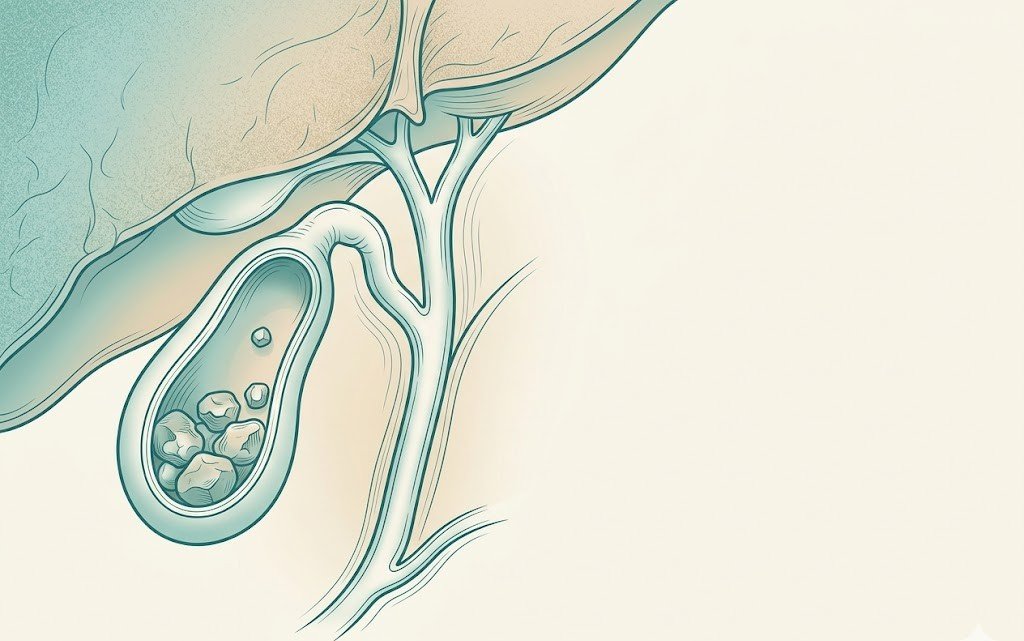
Your gallbladder is a small pouch that sits under the liver. It stores bile — the fluid that helps you digest fat. The trouble is that the gallbladder can form stones, and once those stones start causing pain, infection or other problems, the safest and most lasting answer is usually to remove the gallbladder altogether.
That operation is called a cholecystectomy. When it’s done through a few small keyhole cuts rather than one large incision, it’s a laparoscopic cholecystectomy — what most people simply call keyhole gallbladder surgery.
Removing the gallbladder treats the problem for good, because the stones can’t come back once the pouch is gone. And the good news is that you can live a full, normal life without a gallbladder — your liver carries on making bile just as before. Dr Kumar will only ever advise surgery when the stones are genuinely causing trouble, and he’ll explain why in plain language before you decide anything.
Conditions this surgery treats
Laparoscopic gallbladder removal is the standard treatment for problems caused by gallstones and an inflamed or diseased gallbladder, including:
Experienced hands for straightforward and difficult gallbladders
Laparoscopic cholecystectomy is among the operations Dr Kumar performs most often, and that volume matters. Many gallbladders come out smoothly. But some are what surgeons call difficult gallbladders — thickened, badly inflamed, scarred from earlier attacks, or stuck to nearby structures. These are exactly the cases where experience counts most, and where Dr Kumar’s training as an AIIMS-trained HPB and GI surgeon makes the difference.
A few things sit at the heart of his approach:
da Vinci Robotic Surgery
Now also available with robotic assistance
Gallbladder removal (cholecystectomy) is now also available using the da Vinci robotic surgical system. For straightforward cases, standard laparoscopic removal remains an excellent approach; robotic assistance may be considered for more complex situations such as severe inflammation (cholecystitis), anatomical variants, or patients with significant previous abdominal surgery. Open, laparoscopic and robotic approaches are all available — Dr Kumar will recommend whichever is best for your case.
Your gallbladder surgery, step by step
Before surgery
Dr Kumar reviews your scans (usually an ultrasound) and a few blood tests, and checks whether any stones may have slipped into the bile duct. You’ll be asked not to eat or drink for a few hours beforehand. The team will go through your medicines with you and answer every question, so you walk in knowing exactly what’s planned.
The operation
The surgery is done under general anaesthetic, so you’re fully asleep and feel nothing. Dr Kumar makes a few small keyhole cuts — usually around three or four — in the upper part of your tummy. Through these, a tiny camera and fine instruments are passed to gently free the gallbladder and lift it out. The bile duct is carefully identified and protected throughout. Most keyhole gallbladder removals take under an hour, though a difficult gallbladder can take longer. Many patients go home the same day (day-care surgery); some stay one night.
Hospital stay
For a routine case, you’ll be up and walking the same day and can often go home once you’re comfortable, eating lightly and your pain is well controlled. If your gallbladder was badly inflamed or the surgery was more involved, a short stay of a day or two lets the team keep an eye on you.
Recovery at home
You’ll have a few small dressings rather than one long wound. Mild shoulder-tip or tummy discomfort for a day or two is normal and settles quickly. The team gives you clear, simple instructions on wound care, eating and when to ease back into activity — and you’ll always have a number to call if anything worries you.
The benefits, and the honest risks
Why keyhole surgery helps
The honest risks
Gallbladder removal is a safe, well-established operation, but no surgery is risk-free, and Dr Kumar believes you deserve the full picture:
How long until you’re back to normal?
Everyone heals at their own pace, but for a routine keyhole gallbladder removal the general picture is:
If your gallbladder was acutely inflamed or the operation was more complex, recovery may take a bit longer, and that’s perfectly normal.
Cost and insurance
Laparoscopic gallbladder removal is a routine, widely performed operation, and it’s commonly covered by health insurance. The exact cost depends on your case, the type of admission and your insurance plan. Dr Kumar’s team will explain the likely costs clearly, help you understand what your policy covers, and assist with cashless approval and paperwork where possible — so there are no surprises. Just ask, and they’ll walk you through it.
Frequently asked questions
Often, no. For a routine keyhole gallbladder removal, many patients go home the same day as day-care surgery, once they’re comfortable, eating lightly and their pain is controlled. If your gallbladder was badly inflamed or the operation was more involved, a short overnight stay lets the team keep a close eye on you. Dr Kumar will tell you which to expect for your case.
Yes — completely. The gallbladder only stores bile; it doesn’t make it. Once it’s removed, your liver carries on producing bile just as before, and it flows straight into the intestine. The vast majority of people eat normally and notice no lasting difference. A few find very fatty meals don’t sit as well for a short while early on, and that usually settles.
Sometimes a stone slips out of the gallbladder into the main bile duct (a CBD stone), which can cause jaundice or pancreas inflammation. Dr Kumar checks for this before surgery. If a stone is found, it can be cleared — often with a separate keyhole-style procedure through the mouth (an endoscopy) before or after your gallbladder is removed, and sometimes during the operation itself. As an HPB and GI surgeon, this is well within his routine work.
Dr Kumar plans every gallbladder removal as a keyhole (laparoscopic) operation, and the great majority stay that way. Occasionally, when a gallbladder is very inflamed or scarred, the safest decision is to switch to a small open incision mid-operation. This is a sound, protective choice — not a failure — and Dr Kumar will have explained the possibility to you in advance.
Most people are surprised by how manageable it is. Because the cuts are small, pain is usually mild and well controlled with simple painkillers. Some feel a little shoulder-tip or tummy discomfort for a day or two — a normal after-effect of keyhole surgery — which settles quickly.

Written & medically reviewed by Dr Ameet Kumar, M.Ch (GI Surgery, AIIMS), FRCS (Glasgow), FAIS. Last updated: June 2026.
Have gallstones? Let’s find the right answer for you
If you’ve been told you have gallstones, or you’re getting pain after meals, book a consultation with Dr Ameet Kumar. He’ll review your reports, explain whether surgery is truly needed, and answer every question — with no pressure either way.