
INGUINAL (GROIN) · UMBILICAL (BELLY-BUTTON) · INCISIONAL HERNIA
Found a bulge or a soft lump? Let’s find out what it is — and what to do about it
A hernia is one of the most common reasons people see a surgeon, and the good news is that it’s very treatable. Dr Ameet Kumar treats every type of hernia in Bangalore — groin, belly-button and the kind that appears after a previous operation — using keyhole and open repair. He is AIIMS-trained, FRCS (Glasgow), with over 4,500 surgeries across 25 years.
4,500+
Surgeries
25+
Years Experience
FRCS (Glasgow)
Royal College of Surgeons
M.Ch AIIMS
GI Surgery, New Delhi
What exactly is a hernia?
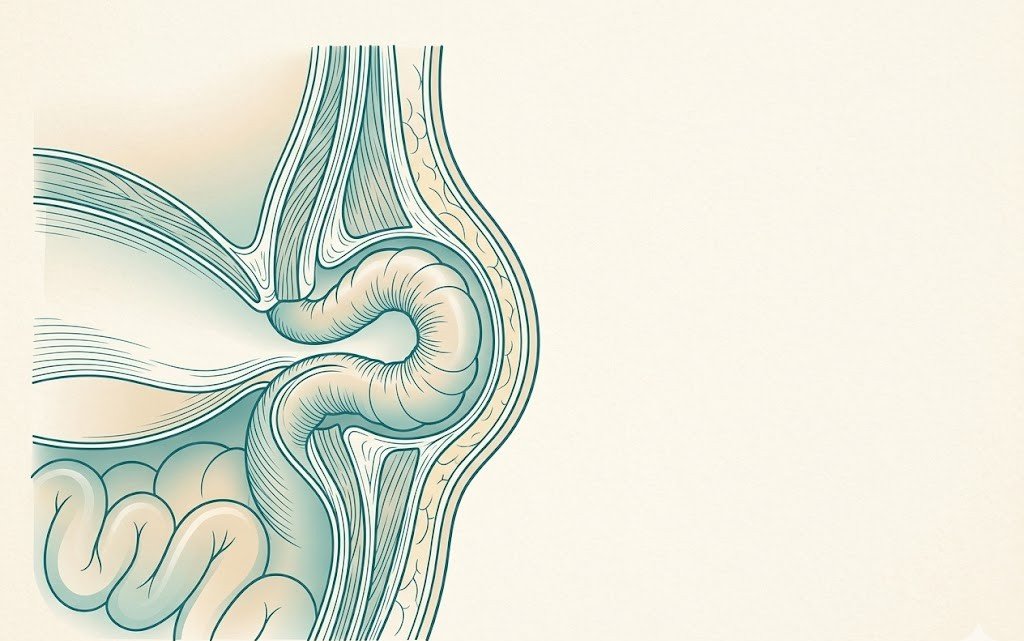
The wall of your tummy is a layer of strong muscle that holds everything inside neatly in place. A hernia happens when there’s a weak spot or a small gap in that wall, and a bit of tissue — often part of the bowel or some fatty tissue — pushes through it. That’s what creates the bulge you can see or feel.
Think of it like the inner tube of a tyre poking through a worn patch in the outer wall. The hernia is the gap; the lump is what’s coming through it. Hernias are very common, and they don’t mean you’ve done anything wrong. They’re named by where they appear:
What a hernia feels like — and when it’s an emergency
Most hernias start small and quietly. The usual signs are:
Many hernias aren’t painful at first. But a hernia won’t repair itself, and over time it tends to get a little bigger.
When a hernia is an emergency — get help now
Very occasionally a loop of bowel gets trapped in the hernia and its blood supply is cut off. This is called strangulation, and it is a surgical emergency. Go to the nearest emergency department straight away — or call 9606028116 — if you notice:
Don’t wait this one out. Trapped bowel needs treating within hours.
Why hernias happen
A hernia usually comes from a mix of a naturally weaker spot in the tummy wall and the everyday pressures that push against it. Some people are born with a weaker area; for others it develops over time. Things that make a hernia more likely include:
You can’t always prevent a hernia, but staying a healthy weight, treating a long cough or constipation, and lifting carefully all help take the strain off your tummy wall.
How a hernia is diagnosed
Most hernias are diagnosed simply and quickly. In the clinic, Dr Kumar looks at the area and gently feels the bulge, sometimes asking you to stand or cough so he can see it clearly — a hernia often shows up more obviously under that bit of pressure. For many people, this examination alone is enough to confirm it.
If the picture is less clear — a small, deep or recurrent hernia, or a complex one through an old scar — an ultrasound or CT scan gives a fuller view, helping Dr Kumar plan the safest, most suitable repair for you.
Do I need surgery?
The single most important thing to understand is this: a hernia does not heal on its own. No tablet, exercise, belt or truss closes the gap in the wall. A support belt may ease the feeling for a while, but it doesn’t fix the problem — surgery is the only lasting cure.
That doesn’t always mean rushing to the operating theatre. There are two sensible paths, and Dr Kumar will help you choose:
Modern hernia repair almost always uses a soft mesh — a fine, flexible patch placed over the weak spot to reinforce it, like a sturdy patch behind a tear in fabric. The mesh becomes part of your own tissue as you heal and gives a far stronger, longer-lasting repair than stitching the gap alone, with a much lower chance of the hernia coming back.
How Dr Kumar repairs hernias
Hernia surgery is one of Dr Kumar’s core areas of practice. He repairs the full range — from straightforward groin and belly-button hernias to large, complex and recurrent ones that other surgeons may find challenging — and has a strong research record in the field.
Wherever it’s the right choice for you, Dr Kumar performs keyhole (laparoscopic) repair — through a few small cuts rather than one larger one. For hernias, the keyhole techniques are known as TEP, eTEP and TAPP. This usually means less pain, smaller scars and a quicker return to normal life, and it’s especially useful for hernias on both sides and for recurrent ones. Where an open repair is more suitable — and sometimes it genuinely is — he does that with the same care.
For complex ventral and recurrent hernias, and larger defects in the tummy wall, Dr Kumar draws on advanced reconstruction techniques to rebuild the wall durably. He’ll always explain, in plain language, which approach fits your hernia and why.
Learn more
Evidence at a glance: AIIMS-trained · FRCS (Glasgow) · 4,500+ surgeries · 25+ years · full hernia range, keyhole (TEP/eTEP/TAPP) and open · complex ventral and recurrent hernias · published hernia research
da Vinci Robotic Surgery
Now also available with robotic assistance
Dr Kumar now also offers hernia repair using the da Vinci robotic surgical system — particularly useful for complex ventral, incisional and recurrent hernias, where 3D vision and wristed instruments make precise mesh placement and abdominal-wall reconstruction easier. Open, laparoscopic and robotic approaches are all available — Dr Kumar will recommend whichever gives you the safest, most complete result for your case.
Recovery — what to expect
Most hernia repairs are day-care or short-stay operations, so you’ll often go home the same day or the next. After keyhole repair, many people are up and walking the same day and feel noticeably better within a week or so.
You’ll be encouraged to move gently and get back to light routine quite soon, while giving heavy lifting and strenuous exercise a few weeks to let the repair settle. Dr Kumar and the team give you clear, simple guidance for your particular repair, so you’re never left guessing.
The outlook after a well-done hernia repair is excellent. With a modern mesh repair, the great majority of people are cured for good, with only a small chance of the hernia ever coming back.
Frequently asked questions
No. A hernia is a gap in the tummy wall, and a gap doesn’t close by itself — no exercise, belt or medicine makes it disappear, and it tends to get slowly bigger over time. Surgery is the only lasting fix. The good news is that, done in good time, hernia repair is a very routine and successful operation.
For the vast majority of people, yes. Surgical mesh has been used for decades and is the standard, well-tested way to repair a hernia, giving a much stronger result and a far lower chance of the hernia returning than stitching alone. Like any operation it carries some small risks, and Dr Kumar will explain these clearly and choose a suitable mesh and technique for you.
Seek help straight away if the bulge suddenly becomes hard, very painful and won’t go back in, or if you have vomiting, a swollen tummy, or the lump turns red or dark. These can be signs that bowel is trapped (strangulated), which needs urgent surgery. Go to the nearest emergency department or call 9606028116 — don’t wait.
It depends on the repair and your job. After keyhole repair, many people with desk-based work return within one to two weeks, while heavier, physical work usually needs a few weeks more to be safe. Dr Kumar will give you advice tailored to your operation and your daily life.
Not always. A small, painless hernia that pushes back easily can sometimes be safely watched for a while, especially if surgery carries extra risk for you. But because a hernia won’t heal on its own and can occasionally trap bowel, a planned repair is the right choice for most people. Dr Kumar will give you an honest recommendation either way.
Also see: Conditions — Gallstones · Acid Reflux & GERD | Second Opinion | Contact
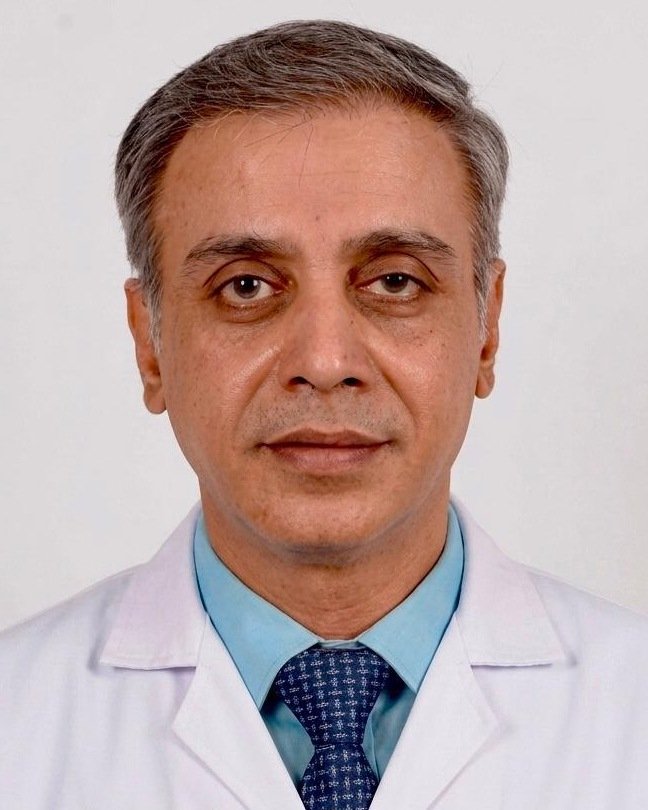
Written & medically reviewed by Dr Ameet Kumar, M.Ch (GI Surgery, AIIMS), FRCS (Glasgow), FAIS. Last updated: June 2026.
Not sure if that lump needs treating? Let’s take a look
If you’ve noticed a bulge or a dragging discomfort, the simplest next step is to have it checked. Book a consultation with Dr Ameet Kumar — he’ll examine it, explain clearly what’s going on, and tell you honestly whether you need surgery now, later or not at all.
Consultant — Sakra World Hospital, Devarabeesanahalli, Bengaluru