
CONDITION · OBESITY · WEIGHT & METABOLIC HEALTH
Obesity is a medical condition — not a lack of willpower
If you’ve struggled with your weight for years, you already know that “eat less, move more” rarely tells the whole story. Obesity is a chronic condition tied to your hormones and metabolism, and it can quietly affect your heart, your blood sugar, your liver and your joints. Dr Ameet Kumar looks at the whole picture — your health, not just the scale — and explains every option honestly, from lifestyle support to weight-loss surgery in Bangalore.

4,500+
Surgeries
25+
Years Experience
56
Publications
FRCS (Glasgow)
AIIMS-trained GI & HPB Surgeon
Understanding obesity as a chronic condition
Carrying excess weight isn’t simply a matter of choice or self-control. Obesity is a long-term medical condition in which the body stores more fat than is healthy — and it’s driven by your hormones, your metabolism, your genes, your sleep, your stress and your environment, not just what’s on your plate.
Your body actively defends its weight. Hormones that control hunger and fullness, and the way you handle blood sugar, all push back when you try to lose weight — which is why so many people lose a few kilos and then regain them, again and again. That isn’t a personal failing. It’s biology, and it deserves the same medical attention as any other long-term condition.
BMI, explained simply
Doctors often use Body Mass Index (BMI) as a quick first measure — it’s your weight compared with your height. As a rough guide for Indian adults, a BMI around 23–25 is considered overweight, and 25 and above is in the range where weight starts to affect health. But BMI is only a starting point. Two people with the same BMI can be in very different health, which is why Dr Kumar always looks beyond the number to how your weight is actually affecting you.
How obesity affects your health
The reason to take obesity seriously isn’t appearance — it’s the conditions that travel with it. As weight rises, so does the strain on nearly every system in the body. The good news: when weight comes down, many of these improve too.
Type-2 diabetes
Excess weight makes the body less able to respond to insulin, pushing blood sugar up over time. Type-2 diabetes and obesity are so closely linked that treating one often improves the other — which is why weight management is central to controlling blood sugar.
High blood pressure & cholesterol
Extra weight makes the heart work harder and tends to raise blood pressure and cholesterol, increasing the long-term risk to your heart and blood vessels.
Fatty liver disease
Fat can build up inside the liver, causing inflammation that, left unchecked, can slowly damage it over years. Fatty liver often has no symptoms at all, which is exactly why it’s easy to miss.
PCOS (polycystic ovary syndrome)
For many women, weight and the body’s hormones are deeply connected. Obesity can worsen PCOS — affecting periods, fertility and blood sugar — and weight reduction can help bring cycles and hormones back into better balance.
Obstructive sleep apnoea
Excess weight around the neck and chest can interrupt breathing during sleep, leaving you tired through the day and placing extra strain on the heart.
Joint pain
Carrying extra weight loads the knees, hips and lower back, wearing joints down and making everyday movement painful over time.
These conditions feed into one another, which is why Dr Kumar treats obesity as a whole-body health issue — not a number to be scolded about.
Why obesity happens
There’s rarely a single cause, and almost never a simple one. Obesity usually comes from several factors working together over many years:
Understanding your particular mix matters, because it shapes which treatment is most likely to work for you.
How Dr Kumar assesses your weight and health
A proper assessment is about far more than stepping on a scale. When you see Dr Kumar, he looks at the full picture so that any advice fits you:
From there, Dr Kumar can explain honestly where you stand and which options genuinely make sense — without pressure in any direction.
The options — and where surgery fits in
Treatment for obesity is a ladder, not a single leap. For most people the first steps are about lifestyle and medical management, and Dr Kumar will always start there where it’s reasonable to do so.
Lifestyle and dietary changes
Sustainable changes to eating, activity, sleep and stress — supported by a dietitian — are the foundation of any weight plan, and remain important even if you go on to have surgery.
Medical management
Treating the conditions that come with obesity, and in some cases medicines that support weight loss, can help — guided by the right specialists.
When weight-loss (bariatric/metabolic) surgery is considered
For people living with more significant obesity — especially when it’s already harming their health and other methods haven’t given lasting results — surgery becomes a genuine medical option. Because it works on the body’s metabolism, weight-loss surgery often improves or reverses conditions like type-2 diabetes, fatty liver and high blood pressure, which is why it’s also called metabolic surgery.
As a general guide, surgery is usually considered when BMI is around 37.5 or above, or around 32.5 or above when there’s also a weight-related condition such as diabetes — but these are only starting points, and the right decision always depends on your full health picture.
How Dr Kumar helps
Bariatric and metabolic surgery is one of Dr Kumar’s three core areas of practice. He trained in this field under the proctorship of Dr Shashank Shah, a globally respected name in weight-loss surgery, and has published research in the field — including a study on how sleeve gastrectomy improved PCOS in a patient living with severe obesity, a reminder of how closely weight and hormones are linked.
When surgery is the right path, Dr Kumar performs the full range — sleeve gastrectomy, gastric bypass (Roux-en-Y), mini / one-anastomosis gastric bypass, and revision surgery for earlier procedures that haven’t worked as hoped — all by keyhole (laparoscopic) surgery, through a few small cuts rather than one large wound.
Good obesity care is a team effort, not just an operation. Alongside Dr Kumar, your journey involves dietitians and other specialists, both before surgery and well afterwards — because long-term follow-up, healthy habits and ongoing support are what keep you well.
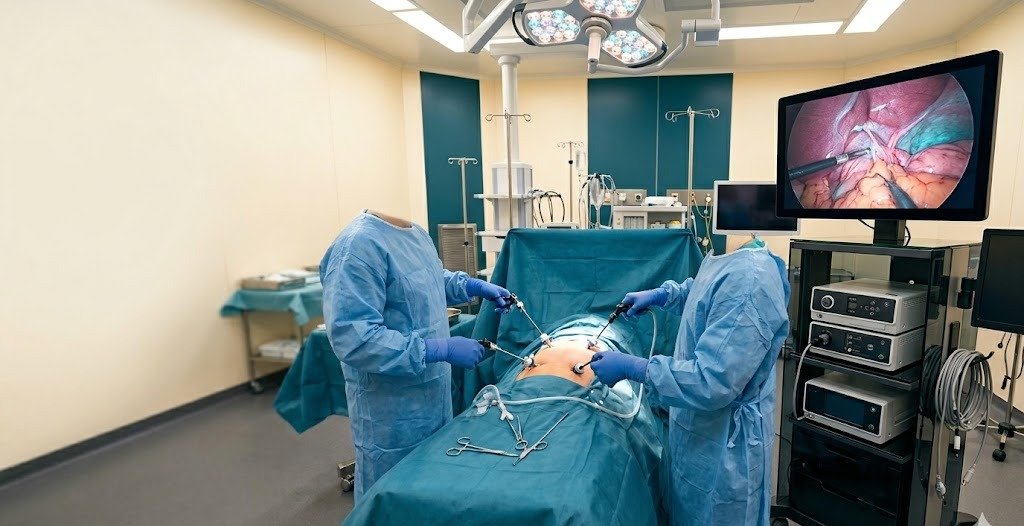
da Vinci Robotic Surgery
Now also available with robotic assistance
Weight-loss operations — sleeve gastrectomy, gastric bypass and revision surgery — are now also available with da Vinci robotic assistance. Its 3D vision and wristed instruments can help in patients with a higher BMI or in revision surgery, with the same small keyhole incisions. Open, laparoscopic and robotic approaches are all available — Dr Kumar will recommend whichever gives you the safest, most complete result for your case.
What to expect
Every person’s path is different, and Dr Kumar will never promise a specific number on the scale. What he will do is set honest expectations.
For many people, losing weight steadily over the months after surgery brings real changes — more energy, easier movement, and often a meaningful improvement in conditions like type-2 diabetes, blood pressure and fatty liver, sometimes allowing medicines to be reduced or stopped. Results vary from person to person, and they depend as much on the support and habits after treatment as on the treatment itself.
What stays constant is the approach: a clear assessment, honest advice, and care that continues long after the first appointment.
Frequently asked questions
Not at all — and it’s one of the most common worries people carry. Obesity is a chronic medical condition driven by your hormones and metabolism, not a lack of effort. Surgery is a recognised medical treatment, not a shortcut: it’s a tool that works alongside the changes you make in eating, activity and follow-up. Choosing it after years of struggle takes courage, not the easy road.
For many people, weight-loss surgery improves type-2 diabetes significantly — often enough to reduce or stop diabetes medicines, sometimes within weeks. This is why it’s also called metabolic surgery. That said, “cure” isn’t a word Dr Kumar will promise, because results vary from person to person. He’ll give you an honest read on what’s realistic for you only after a proper assessment.
As a general guide, weight-loss surgery is usually considered when your BMI is around 37.5 or above, or around 32.5 or above if you also have a weight-related condition such as type-2 diabetes, high blood pressure or fatty liver. These are starting points, not strict cut-offs. The right decision depends on your full health picture, which is exactly what a consultation is for.
Modern keyhole bariatric surgery is well-established and, in experienced hands, has a strong safety record. Like any operation it carries some risks, and Dr Kumar will explain these clearly and honestly so you can make a confident, informed choice. Careful assessment, an experienced team and good follow-up are what keep it safe.
Yes — and those steps matter at every stage. Lifestyle and dietary changes, supported by a dietitian, are the foundation of any weight plan and stay important even after surgery. Surgery is considered when significant obesity is already affecting your health and other approaches haven’t given lasting results.
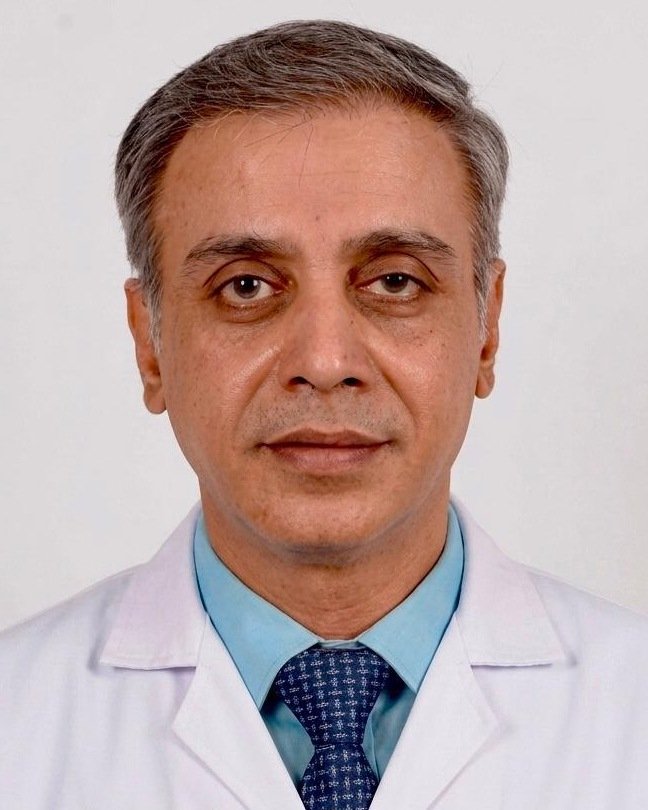
Written & medically reviewed by Dr Ameet Kumar, M.Ch (GI Surgery, AIIMS), FRCS (Glasgow), FAIS. Last updated: June 2026.
Let’s look at the whole picture — honestly and without judgement
If you’ve been carrying extra weight and worrying about your health, book a consultation with Dr Ameet Kumar. He’ll listen, assess you properly, and explain your options clearly — from lifestyle support to surgery — so you can decide what’s right for you, with no pressure either way.
Consultant — Sakra World Hospital, Devarabeesanahalli, Bengaluru