
PROCEDURE · HEPATO-PANCREATO-BILIARY SURGERY
Whipple’s Procedure (Pancreaticoduodenectomy)
The major operation for cancers and serious conditions of the pancreatic head, lower bile duct and duodenum. It is one of the most demanding operations in all of surgery — and the kind of work Dr Ameet Kumar has devoted his career to. Often called simply the Whipple.
4,500+
Surgeries
25+
Years Experience
56
Publications
FRCS (Glasgow)
AIIMS-trained GI & HPB Surgeon
What a Whipple’s operation is — and why it’s done
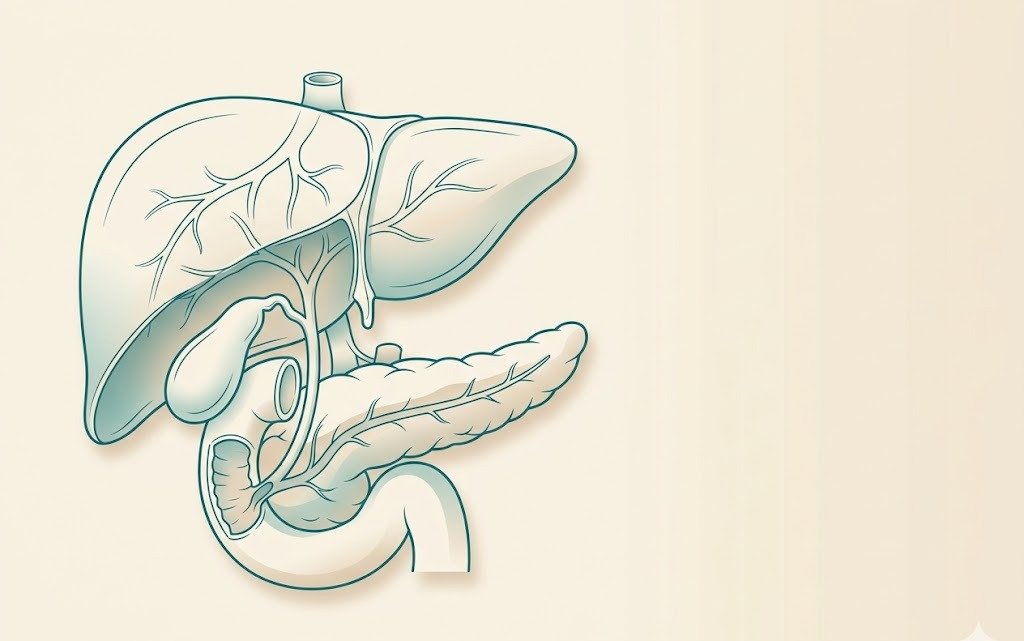
A Whipple’s procedure — its proper name is pancreaticoduodenectomy — is the operation used to remove tumours and serious disease from where the pancreas, bile duct and the first part of the small intestine all meet. It is most often done for cancer of the head of the pancreas, and also for cancers of the lower bile duct, the duodenum and the ampulla. It is sometimes the right operation for certain non-cancerous problems too, such as troublesome cysts or chronic disease in the head of the pancreas.
These organs sit deep in the upper abdomen, wrapped closely around major blood vessels and sharing the same delicate plumbing of ducts. That is what makes this operation so technically demanding — and why it is treated as a super-specialty rather than something every general surgeon takes on.
In plain terms, here is what the operation involves:
It is the reconnection — the rebuilding — that makes a Whipple’s so much more than simply removing a tumour. It is long, precise work, and it is exactly why the experience of the surgeon and team matters so much.
Conditions a Whipple’s procedure treats
Pancreatic Cancer & Cysts
Tumours and serious cystic disease of the head of the pancreas — the most common reason for a Whipple’s.
Bile-Duct & Ampullary Cancers
Cancers of the lower bile duct, the ampulla and the duodenum — all treated within the HPB specialty.
Chronic Pancreatitis
Selected chronic or complicated disease in the pancreatic head where surgery offers the best relief.
Why patients are referred to Dr Kumar for a Whipple’s
The Whipple’s procedure is Dr Kumar’s signature operation — the work he has trained hardest for and performed most often. He trained in GI Surgery at AIIMS New Delhi and holds the FRCS of the Royal College of Physicians and Surgeons of Glasgow. Across his career he has performed over 4,500 surgeries, authored 56 publications and holds an h-index of 14.
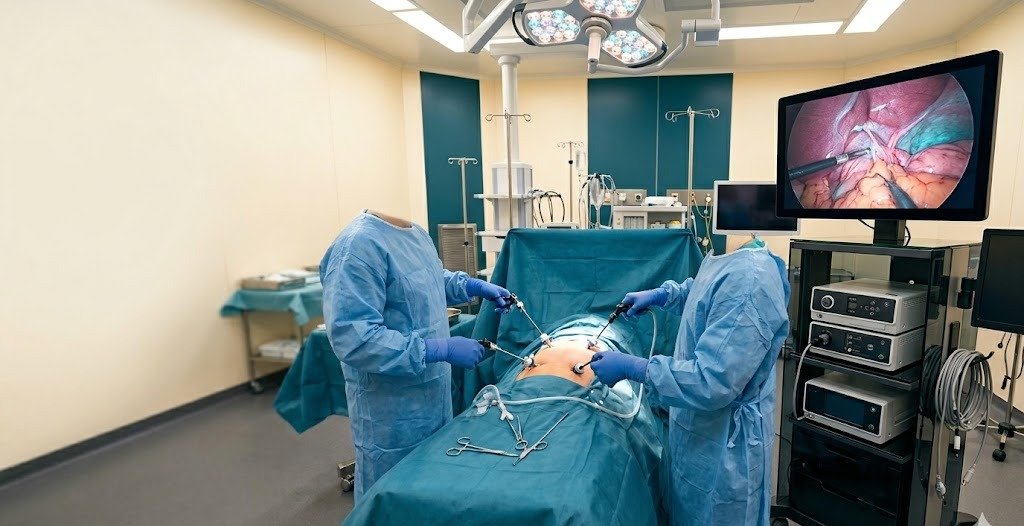
He was among the first surgeons in the Armed Forces Medical Services to perform a totally laparoscopic (keyhole) Whipple’s pancreaticoduodenectomy — one of the hardest operations in all of surgery to do through a few small incisions rather than a large open wound.
He also developed a hybrid laparoscopy-assisted approach to the operation — combining the precision of keyhole surgery for part of the procedure with the control and safety of open surgery for the demanding reconnection. He describes it as the Buddha’s Middle Path: taking the best of both rather than insisting on one for its own sake.
Published, peer-reviewed HPB expertise
Dr Kumar is the lead author of a 2024 randomised controlled trial in the journal HPB, comparing pylorus-resecting against classical Whipple’s pancreaticoduodenectomy — a study at the heart of how this operation is performed worldwide. His HPB operative techniques have also been published as teaching videos in the journal Videoscopy, watched by surgeons internationally.
Why experience and volume matter — the honest version
For most operations, a competent general surgeon will do a fine job. The Whipple’s is different. Study after study has shown that, for this specific operation, outcomes are directly linked to how often the surgeon and the hospital perform it. Experienced, high-volume teams have fewer complications, manage them better when they do happen, and get patients home safely more often. This is not marketing — it is one of the most consistent findings in modern surgery, and it is the single most important thing to understand when choosing where to have a Whipple’s done.
da Vinci Robotic Surgery
Now also available with robotic assistance
Dr Kumar now also offers the Whipple’s procedure (pancreaticoduodenectomy) using the da Vinci robotic surgical system, for selected patients. Its 3D magnified vision and wristed micro-instruments are especially valuable during the delicate reconnection phase of this operation, and the potential benefits include less blood loss, less pain and a faster recovery. Open, laparoscopic, hybrid and robotic approaches are all available — Dr Kumar will recommend whichever gives you the safest, most complete result for your case.
Your Whipple’s journey, step by step
Step 1: Before surgery — the work-up
Getting ready for a Whipple’s is itself careful work. You’ll have detailed scans — usually a specialised CT, and sometimes an MRI or endoscopic ultrasound — to map the tumour and its relationship to the blood vessels, along with blood tests and an assessment of your general fitness. Sometimes a blocked bile duct needs to be relieved first with a small stent. In some cases, chemotherapy is given before surgery to shrink the disease. Dr Kumar will explain exactly where you stand and why each step is being recommended.
Step 2: Prehabilitation — getting you strong
The fitter you go in, the better you tend to come out. In the weeks before surgery you’ll be guided on nutrition, gentle exercise, controlling diabetes if you have it, and stopping smoking. This prehab is not a formality — for a big operation, it genuinely improves recovery.
Step 3: The operation
Under general anaesthetic, the diseased portion is removed and the digestive tract is carefully reconnected. Depending on your case and anatomy, this may be done by open surgery, totally laparoscopically, or by Dr Kumar’s hybrid laparoscopy-assisted approach. It is a long operation — that length is normal and reflects how meticulous the reconstruction must be.
Step 4: Hospital stay
Expect to stay in hospital for several days to around two weeks, beginning with a short period of closer monitoring. The team will get you moving early, manage your pain, and gradually reintroduce eating and drinking. Some patients go home with simple drains or supports that are removed later at an outpatient visit.
Step 5: Recovery at home
Once home, energy returns gradually over the following weeks. You’ll be guided on eating in smaller, more frequent meals, on any enzyme or medication support your digestion may need, and on what activity is safe. Follow-up visits track your healing and, where the disease requires it, coordinate any further treatment.
The benefits and the risks — honestly
There is no point pretending a Whipple’s is a small operation. It is major surgery, and you deserve a straight account of both sides.
The benefits
The risks
Here is the part that matters most: experienced, high-volume surgical care meaningfully improves the safety of this operation. Complications are not only less likely in skilled hands — they are recognised and managed earlier when they do arise. Dr Kumar will always walk you through the specific risks for your case, in plain language, before you decide anything.
How recovery usually unfolds
Every patient is different, and whether your operation is open or keyhole makes a difference. As a general guide:
If further treatment such as chemotherapy is part of your plan, it usually begins once you’ve recovered enough from surgery. Dr Kumar and the team will plan your recovery in detail and support you through every stage.
A note on cost and insurance
The cost of a Whipple’s procedure depends on your particular case — the approach used, the length of hospital stay, and the support you need afterwards. It is a planned major operation, and is covered by most health insurance and cashless mediclaim policies. Dr Kumar’s team will give you a clear, itemised estimate before anything is scheduled, and will help you and your insurer with the paperwork and pre-authorisation so there are no surprises.
Common questions about the Whipple’s procedure
It’s one of the biggest operations in general surgery, and there’s no pretending otherwise — it removes and rebuilds part of your digestive system in a difficult area of the body. But for cancers of the pancreatic head and bile duct, it’s often the best chance of cure, and in experienced, high-volume hands the results today are far better than this operation’s old reputation. Dr Kumar will explain exactly what it means for your case before you decide.
Yes — in selected patients. Dr Kumar was among the first in the Armed Forces Medical Services to perform a totally laparoscopic (keyhole) Whipple’s, and he also offers a hybrid laparoscopy-assisted approach that combines keyhole and open techniques. Keyhole isn’t right for every case, though; where open surgery is safer or more thorough, that’s what he’ll recommend. The aim is always the most complete, safest operation for you — not a particular technique for its own sake.
For this operation more than almost any other, how often the surgeon and hospital perform it is directly linked to safety and recovery. Experienced, high-volume teams have fewer complications and handle them better when they happen. It’s one of the most consistent findings in modern surgery — and choosing an experienced surgeon is one of the most important decisions within your control.
Expect a hospital stay of several days to around two weeks, then a few more weeks to a couple of months to feel properly back to yourself. Energy and appetite return gradually. If further treatment is needed, it usually starts once you’ve recovered enough from surgery. Dr Kumar’s team will plan and support your recovery at every stage.
Not necessarily. Some growths and cysts can be watched rather than operated on, and the right answer depends on what the scans and tests show. Bring your reports, and Dr Kumar will give you an honest read on whether this operation is genuinely needed — or whether there’s a safer path for you.

Written & medically reviewed by Dr Ameet Kumar, M.Ch (GI Surgery, AIIMS), FRCS (Glasgow), FAIS. Last updated: June 2026.
Facing a Whipple’s? Let’s talk it through.
If you or someone you love has been advised to have a Whipple’s procedure — or you simply want an experienced surgeon’s honest opinion on your reports and scans — let’s talk it through. Book a consultation with Dr Ameet Kumar, or message his team on WhatsApp.