
BILE-DUCT (BILIARY) CANCER · SURGICAL ONCOLOGY
Bile-duct (biliary) cancer — cholangiocarcinoma, explained honestly
Dr Ameet Kumar is an AIIMS-trained HPB & GI-oncology surgeon, FRCS (Glasgow), with over 4,500 surgeries. When a bile-duct cancer can be removed, surgery offers the best chance of cure — and careful patient selection, planning, and experience matter enormously.
4,500+
Surgeries Performed
25+
Years Experience
56
Peer-Reviewed Publications
M.Ch · FRCS
AIIMS New Delhi · Glasgow
What is bile-duct cancer (cholangiocarcinoma)?
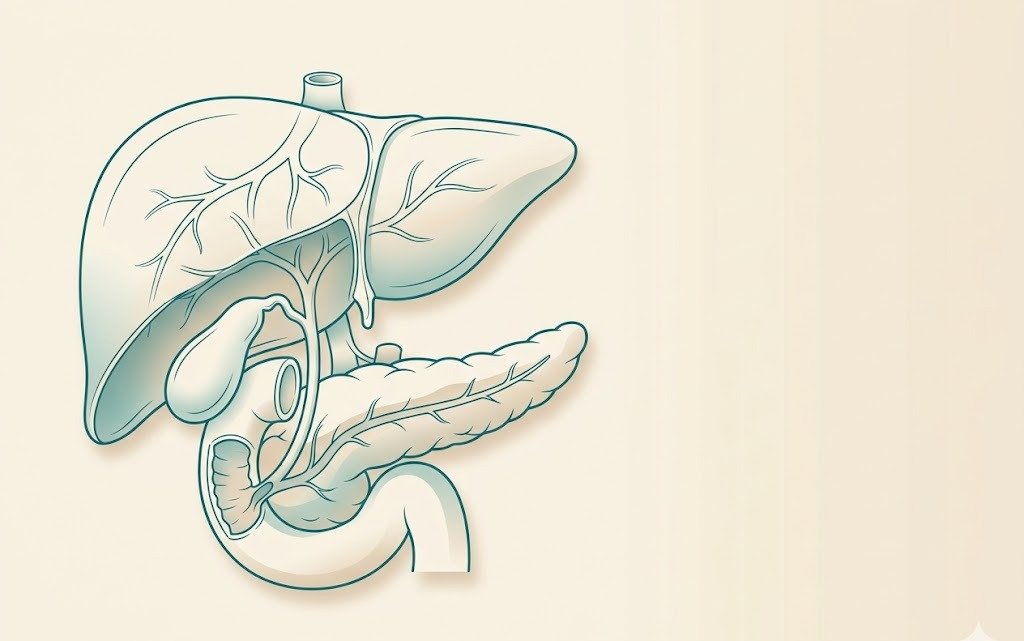
Cholangiocarcinoma is a cancer that arises from the cells lining the bile ducts — the network of tubes that carry bile from the liver and gallbladder into the small intestine. It is relatively rare but important to diagnose early, because surgery remains the only treatment that offers a chance of cure.
Surgeons and oncologists classify cholangiocarcinoma into three types based on where the tumour arises, because each type behaves differently and requires a different operation:
Intrahepatic
Arises inside the liver, within the smaller bile ducts. Often treated like a primary liver cancer with a formal liver resection.
Hilar / Perihilar (Klatskin tumour)
Arises at the hilum — where the right and left bile ducts join outside the liver. Also called a Klatskin tumour. The most common type and technically demanding to resect.
Distal
Arises in the lower bile duct near the pancreas and duodenum. Treated with a Whipple’s procedure (pancreaticoduodenectomy).
As a tumour grows, it blocks the flow of bile. This causes bile to back up into the bloodstream, producing the characteristic yellow discolouration of jaundice. Identifying the site and extent of blockage is central to planning treatment.
Symptoms and red flags
Bile-duct cancer is often painless in its early stages, which is why it tends to be diagnosed at a more advanced stage. If you or a family member notice any of the following, please seek medical assessment promptly — earlier referral to a specialist gives more surgical options.
Any new jaundice should be assessed by a doctor the same week — do not wait.
Causes and risk factors
In most patients with cholangiocarcinoma, no single cause can be identified. The following conditions are known to increase risk, often by causing chronic inflammation or structural abnormality of the bile ducts:
How is bile-duct cancer diagnosed?
Accurate staging is critical, because not every bile-duct cancer is resectable — and operating on an unresectable tumour causes harm without benefit. Dr Kumar’s assessment always includes:
Imaging & Biochemistry
Tissue & Surgical Planning
Treatment options
Surgery is the only treatment that offers a realistic chance of cure for bile-duct cancer. The operation varies by tumour location, and each carries significant technical demands:
Hilar / Perihilar (Klatskin)
Bile-duct resection combined with a major liver resection (typically right or left hepatectomy, often including the caudate lobe). One of the most complex operations in HPB surgery.
Distal — Whipple’s Procedure
Pancreaticoduodenectomy (Whipple’s) removes the head of the pancreas, duodenum, and lower bile duct. The standard operation for distal cholangiocarcinoma.
Intrahepatic — Liver Resection
Formal hepatectomy (segmental or lobar) with clear resection margins. Adequate liver remnant volume must be confirmed beforehand.
When surgery is not possible
Where the tumour cannot be safely removed, the focus shifts to relieving obstruction and prolonging quality of life. Options include endoscopic or percutaneous biliary stenting to relieve jaundice, and systemic chemotherapy in appropriately selected patients. Dr Kumar discusses all options honestly with each patient and family, and coordinates care through a full MDT.
How Dr Ameet Kumar approaches biliary cancer
Biliary cancer surgery demands a high-volume HPB surgeon who is comfortable with the full range of complex resections — from Whipple’s for distal tumours to combined bile-duct and liver resection (with or without the caudate lobe) for hilar disease. Dr Kumar has trained and operated at AIIMS New Delhi — India’s foremost surgical institution — and holds the FRCS (Glasgow), with over 25 years and 4,500+ surgeries across the spectrum of HPB and GI oncology.
His approach with every patient referred with a biliary cancer diagnosis:
Dr Kumar now consults at Sakra World Hospital, Bengaluru. If you have received a bile-duct cancer diagnosis — or been told surgery may not be possible — a second opinion from a specialist HPB surgeon is always worthwhile.
DA VINCI ROBOTIC SURGERY
Now also available with robotic assistance
For selected patients, bile-duct cancer surgery — including the Whipple’s procedure for tumours in the lower bile duct — is now also available using the da Vinci robotic surgical system, with 3D magnified vision and wristed instruments for precise dissection and reconnection. Whether robotic surgery is suitable depends on where the tumour sits; complex hilar (Klatskin) resections are often best done open. Open, laparoscopic and robotic approaches are all available — Dr Kumar will recommend whichever gives you the safest, most complete result for your case.
Recovery and follow-up
Recovery from biliary cancer surgery is a significant undertaking, and expectations should be set honestly. Most patients undergoing a major HPB resection spend between 7 and 14 days in hospital; those who have had pre-operative jaundice may need additional time for liver function to stabilise.
Key milestones after surgery include resolution of jaundice, return of normal bile flow, and recovery of liver function. Most patients are back to light activities within 4–6 weeks; full recovery after a Whipple’s or major hepatectomy typically takes 2–3 months. Follow-up includes regular imaging and tumour-marker checks, usually every 3–6 months in the first two years.
Every patient’s recovery trajectory is individual. Dr Kumar’s team will discuss what to expect specifically for your procedure during pre-operative counselling.
Frequently asked questions
Cholangiocarcinoma is cancer of the bile ducts — the tubes that carry bile (a digestive fluid made by the liver) into the small intestine. It is classified by where in the duct system it arises: inside the liver (intrahepatic), at the main junction outside the liver (hilar), or in the lower portion near the pancreas (distal).
A Klatskin tumour is a hilar (perihilar) cholangiocarcinoma — a bile-duct cancer that arises at the confluence where the right and left hepatic ducts join. It is named after Gerald Klatskin, who characterised it in 1965. Because of its position at the junction of the liver’s main drainage ducts, it is technically demanding to resect and typically requires a combined bile-duct and liver resection.
Jaundice occurs when bile cannot flow normally through the ducts. A tumour blocking a bile duct causes bile — which contains a yellow pigment called bilirubin — to back up into the bloodstream. Bilirubin then deposits in the skin and the whites of the eyes, producing the yellow colour. It also spills into the urine (making it dark) and is absent from the stool (making it pale). Relieving this blockage — either surgically or with a stent — is an important early step in treatment.
Some bile-duct cancers are resectable (can be surgically removed) and some are not. Resectability depends on the tumour’s location, how far it has grown into surrounding structures (blood vessels, liver), and the patient’s fitness for major surgery. An MDT assessment at a specialist centre is the only way to answer this question for your specific situation. If a previous review concluded that surgery was not possible, a second opinion from an experienced HPB surgeon is always worth seeking.
The operation depends on where the cancer is. Hilar (Klatskin) tumours require bile-duct resection combined with a major liver resection (hepatectomy), often including the caudate lobe. Distal bile-duct cancers are treated with a Whipple’s procedure (pancreaticoduodenectomy). Intrahepatic cancers require a liver resection (segmental or lobar). Each operation is different, and the choice is made after careful staging and MDT review.
A biliary stent is a small tube placed inside the blocked bile duct (via ERCP or percutaneously) to restore bile flow and relieve jaundice. Stenting may be used before surgery (pre-operative biliary drainage, to optimise liver function), as a bridge to allow staging, or as definitive palliation when the tumour cannot be removed. It is not a cure but can significantly improve quality of life and allow other treatments to proceed safely.
CREDENTIALS & EXPERIENCE
Why choose Dr Ameet Kumar for biliary cancer surgery?
Jaundice, or a bile-duct cancer diagnosis? Let’s review your scans together.
A new diagnosis of bile-duct cancer — or being told that surgery is not an option — can be frightening. Dr Ameet Kumar offers specialist consultations for patients seeking a clear second opinion or an experienced HPB surgical assessment. Bring your scans, your reports, and your questions. He will give you a straight answer.
Or call 9606028116 — Sakra World Hospital, Bengaluru