
SPECIALTY · HEPATO-PANCREATO-BILIARY SURGERY
Hepato-Pancreato-Biliary (HPB) Surgery
Specialist surgery for cancers of the liver, pancreas and bile ducts (biliary system) — and for complex benign disease of the liver, pancreas, bile ducts and gallbladder, including the Whipple’s operation. This is the area Dr Ameet Kumar has devoted his career to.
4,500+
Surgeries
25+
Years Experience
56
Peer-reviewed Publications
FRCS (Glasgow)
AIIMS-trained GI and HPB Surgeon
What HPB surgery means — and why it’s so specialised
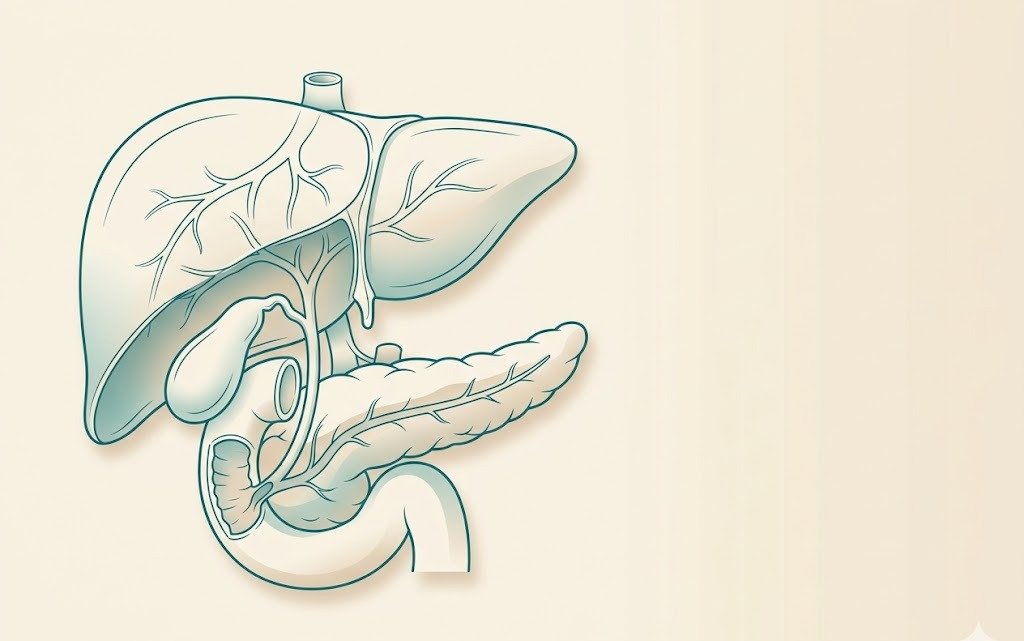
HPB stands for hepato (liver), pancreato (pancreas) and biliary (the bile ducts and gallbladder). These organs sit deep in the upper abdomen, tucked close to major blood vessels, and they share the same delicate plumbing of ducts. A problem in one often affects the others.
Surgery here is widely regarded as some of the most technically difficult in the whole of general surgery. The margin for error is small, the anatomy is unforgiving, and good outcomes depend heavily on how often the surgeon does these specific operations. That’s exactly why HPB is treated as a super-specialty — not something every general surgeon takes on.
It’s also the area Dr Kumar has focused on for most of his career. If you or someone you love has been told there’s a growth on the pancreas, a tumour in the liver, a blocked bile duct or a complex gallbladder problem, the job is simple: to look at everything honestly, explain it in plain language, and tell you what genuinely gives you the best result — whether that’s surgery or not.
HPB conditions Dr Kumar treats
HPB procedures Dr Kumar performs
Why HPB is the area Dr Kumar is known for
HPB is Dr Kumar’s signature field — the work he has trained hardest for and performed most often. He trained in GI Surgery at AIIMS New Delhi, and holds the FRCS of the Royal College of Physicians and Surgeons of Glasgow.
He was among the first surgeons in the Armed Forces Medical Services to perform a totally laparoscopic (keyhole) Whipple’s pancreaticoduodenectomy — one of the hardest operations to do through small incisions rather than a large open wound. His operative video of a Laparoscopic Median Pancreatectomy was published in the journal Videoscopy (2019), and he developed a hybrid laparoscopy-assisted approach to the Whipple’s operation. In 2026, he was trained and certified on the da Vinci robotic surgical system (Intuitive Surgical), adding robotic-assisted precision to his laparoscopic HPB expertise — particularly valuable for complex pancreas, bile-duct and liver operations. Learn about robotic surgery →
Dr Kumar is the lead author of a 2024 randomised controlled trial published in HPB comparing pylorus-resecting against classical Whipple’s pancreaticoduodenectomy — a study at the heart of how this operation is done worldwide. Across his career he has authored 56 publications and holds an h-index of 14.
For you, this depth matters in a very practical way: with these operations, experience and volume are directly linked to safer surgery and better recovery.
His operative HPB range includes:
Keyhole HPB surgery — done well, when it’s right for you
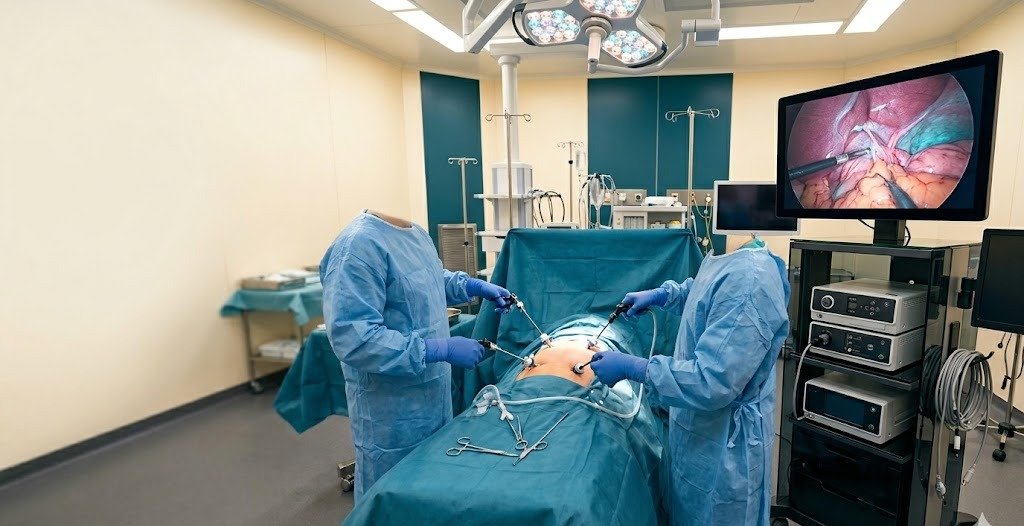
Many HPB operations have traditionally meant a large open incision and a long recovery. Where it’s safe to do so, Dr Kumar performs them with advanced laparoscopic (keyhole) or da Vinci robotic surgery instead — through a few small cuts rather than one big one.
Here’s the honest part: keyhole isn’t automatically better for every patient or every tumour. For some cancers and some anatomy, open surgery is the safer, more thorough choice — and when that’s true, Dr Kumar will tell you and recommend it. The goal is never to use a particular technique for its own sake. It’s to get you the most complete, safest operation, with the easiest recovery your situation allows.
Common questions about HPB surgery
It’s the major operation for cancers and some serious conditions of the pancreatic head and lower bile duct. The surgeon removes the head of the pancreas, part of the small intestine, the gallbladder and part of the bile duct, then carefully reconnects everything so digestion can continue. It’s a long, complex operation — which is exactly why it should be done by a surgeon who performs it regularly.
These are serious operations, and there’s no pretending otherwise. But the single biggest factor in safety is how often the surgeon and the team do these specific procedures. In experienced, high-volume hands, results today are far better than the reputation these operations once had. Dr Kumar will always explain the real risks for your particular case before you decide anything.
Yes — many can, and Dr Kumar performs several of these operations laparoscopically or with the da Vinci robotic system, including pancreatectomy. He was among the first in the Armed Forces Medical Services to do a totally laparoscopic Whipple’s, and is now also certified for robotic-assisted HPB surgery. But keyhole isn’t right for every case; where open surgery is safer or more complete, that’s what he’ll recommend.
Not always. Many cysts and lesions can simply be watched with scans, and some need no treatment at all. Surgery is only the right answer for a minority. Bring your reports and scans, and Dr Kumar will give you an honest read on whether you need an operation — or whether you can safely avoid one.
It depends on the operation and whether it’s keyhole or open. As a general guide, expect a hospital stay of several days to a couple of weeks, and a few weeks to a couple of months to feel properly back to yourself. We’ll plan your recovery in detail and support you through every stage.

Written & medically reviewed by Dr Ameet Kumar, M.Ch (GI Surgery, AIIMS), FRCS (Glasgow), FAIS — Gastrointestinal, HPB, Laparoscopic & Robotic Surgeon. Last updated: September 2026.
Worried about a liver, pancreas or bile-duct problem?
If you’ve been advised to have HPB surgery — or you simply want an experienced surgeon’s honest opinion on your reports and scans — let’s talk it through. Book a consultation with Dr Ameet Kumar, or message his team on WhatsApp.
Call 9606028116