
GALLSTONES · GALLBLADDER DISEASE · KEYHOLE SURGERY
Gallstone trouble? Clear answers and gentle, keyhole treatment
If you’ve been told you have gallstones, it’s natural to feel worried — but you’re in safe, experienced hands. Some gallstones never cause a problem and can simply be watched. Others bring pain or complications and are best treated. Dr Ameet Kumar is an AIIMS-trained GI and HPB surgeon in Bangalore — FRCS (Glasgow), with over 4,500 surgeries across 25 years — and he’ll tell you honestly which kind you have.
4,500+
Surgeries
25+
Years Experience
56+
Publications
FRCS (Glasgow)
AIIMS-trained GI & HPB Surgeon
What’s actually going on
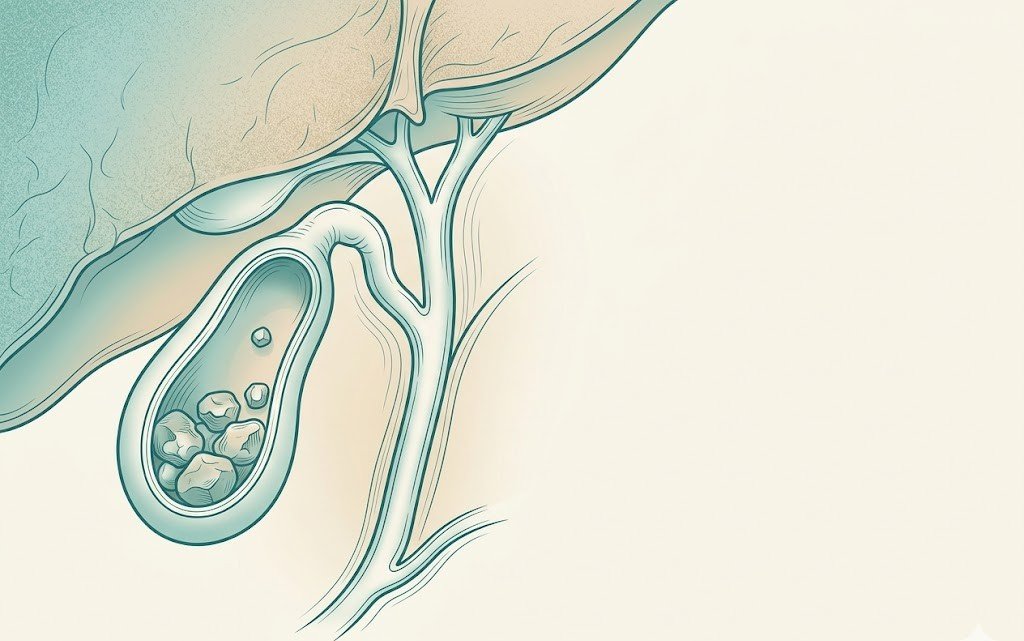
Your gallbladder is a small, pear-shaped pouch tucked under your liver. Its job is simple — it stores bile, a digestive juice the liver makes, and squeezes it out when you eat to help your body break down fatty food.
Sometimes the chemicals in bile fall out of balance and harden into small stones. These are gallstones. They can be as tiny as a grain of sand or as large as a pebble, and you can have one or many. Many people carry gallstones for years and never know it — these “silent” stones often cause no trouble at all.
Problems start when a stone blocks the gallbladder’s narrow outlet or its drainage pipe. That can cause pain, inflammation (called cholecystitis) and, less often, more serious complications. When the gallbladder stops working properly because of stones, that’s what we mean by gallbladder disease.
What gallstones feel like — and when to act fast
The most common sign is pain in the upper-right or upper-middle part of your belly, often after a fatty or heavy meal. It can be sharp or gripping, may travel to your back or right shoulder, and can last from a few minutes to a few hours. Some people also feel bloated, gassy, sick or notice indigestion that won’t settle.
Please don’t wait — see a surgeon promptly — if you have any of these red flags:
These can mean an inflamed or infected gallbladder, or a stone stuck in the bile duct — situations that need quick attention. If any of these happen, contact Dr Kumar’s team on 9606028116 or head to the nearest emergency department.
Why gallstones form
Gallstones form when bile holds too much cholesterol or pigment, or when the gallbladder doesn’t empty as it should. You haven’t done anything wrong — much of it comes down to factors outside your control. Things that make gallstones more likely include:
Knowing your risk factors helps, but gallstones can form even without any of them — which is why the right diagnosis matters more than guesswork.
How gallstones are diagnosed
Finding gallstones is usually straightforward. Dr Kumar will start by listening to your story and examining you, then arrange the tests that fit your situation:
Dr Kumar will explain each result to you in plain words, so you understand exactly what’s going on before any decision is made.
Not every gallstone needs surgery — but some do
Here’s the honest truth, and it’s an important one: not every gallstone needs an operation. If your stones are silent — found by chance, causing no symptoms and no complications — they can very often simply be left alone and watched. Surgery isn’t automatically the answer, and Dr Kumar won’t push you towards an operation you don’t need.
Surgery is the right and recommended treatment when gallstones are causing problems, because once stones have started causing trouble, the trouble tends to come back. You should generally have your gallbladder removed if you have:
What about dissolving stones or “flushing” them out? For the vast majority of people this doesn’t work reliably — medicines to dissolve stones are slow, rarely effective and the stones usually come back. The proven, lasting cure for a problem gallbladder is to remove it. When stones are causing real symptoms, that’s the path Dr Kumar will recommend, and he’ll explain exactly why.
Experienced, careful hands for the gallbladder and bile ducts
Gallbladder and biliary surgery is core to Dr Kumar’s work as an HPB (hepato-pancreato-biliary) surgeon — it’s an area he operates on routinely and has done for years. When your stones need treating, the standard cure is a laparoscopic gallbladder removal — keyhole surgery to take out the whole gallbladder, stones and all, through a few small cuts.
Dr Kumar’s experience goes well beyond the routine case:
You can read more about this advanced work on the HPB Surgery page. Wherever your case sits — simple or complex — Dr Kumar will choose the safest approach for you and explain it clearly.
Recovery — and life without a gallbladder
For a straightforward keyhole gallbladder removal, recovery is usually quick and gentle. Many patients are treated as day-care or with a short overnight stay, walking the same day and home soon after. Most people return to light routine within a week or two, with the small keyhole cuts healing into tiny scars. Dr Kumar and the team guide your recovery step by step and tell you what to expect.
The question almost everyone asks is whether they can manage without a gallbladder — and the reassuring answer is yes. The gallbladder only stores bile; it isn’t essential. Once it’s removed, your liver simply sends bile straight to your gut as before. The vast majority of people eat normally and live a completely normal life afterwards. A few notice looser or more frequent stools or some sensitivity to very fatty meals for a while, and this usually settles on its own.
Frequently asked questions
If your stones are silent and causing no symptoms, you may not need surgery at all — they can often just be watched, and Dr Kumar will tell you honestly if that’s your situation. Medicines or diets that claim to dissolve or flush out stones rarely work, are very slow and the stones usually return. Once stones are causing pain or complications, removing the gallbladder is the proven, lasting cure.
Yes. The gallbladder only stores bile and isn’t essential to digestion. After it’s removed, your liver sends bile directly to your gut and most people eat and live completely normally. Some notice looser stools or sensitivity to very fatty food for a short while, which usually settles by itself.
For most straightforward keyhole removals, yes — it’s often done as day-care or with a single overnight stay, and many patients walk the same day. If your gallbladder is badly inflamed or your case is more complex, Dr Kumar may advise a slightly longer stay so your recovery is safe. He’ll tell you what to expect before the operation.
Silent stones with no symptoms can often be safely left and watched. But once stones have caused pain or inflammation, the problem tends to return and can sometimes lead to more serious complications like infection, jaundice or pancreatitis. That’s why symptomatic gallstones are usually best treated rather than ignored.
Gallbladder removal is normally done by keyhole (laparoscopic) surgery — a few small cuts instead of one large wound — which means less pain, smaller scars and a faster recovery. In a small number of very difficult cases a larger incision is occasionally needed for safety, and Dr Kumar will always explain this honestly beforehand.

Written & medically reviewed by Dr Ameet Kumar, M.Ch (GI Surgery, AIIMS), FRCS (Glasgow), FAIS. Last updated: June 2026.
Worried about gallstones? Let’s get you a clear answer
If you’ve been diagnosed with gallstones or have pain that won’t settle, book a consultation with Dr Ameet Kumar. He’ll review your scans and reports, tell you honestly whether you need surgery or simply watchful waiting, and explain your options in plain language — with no pressure either way.
Or call 9606028116 · Consultant — Sakra World Hospital, Devarabeesanahalli, Bengaluru